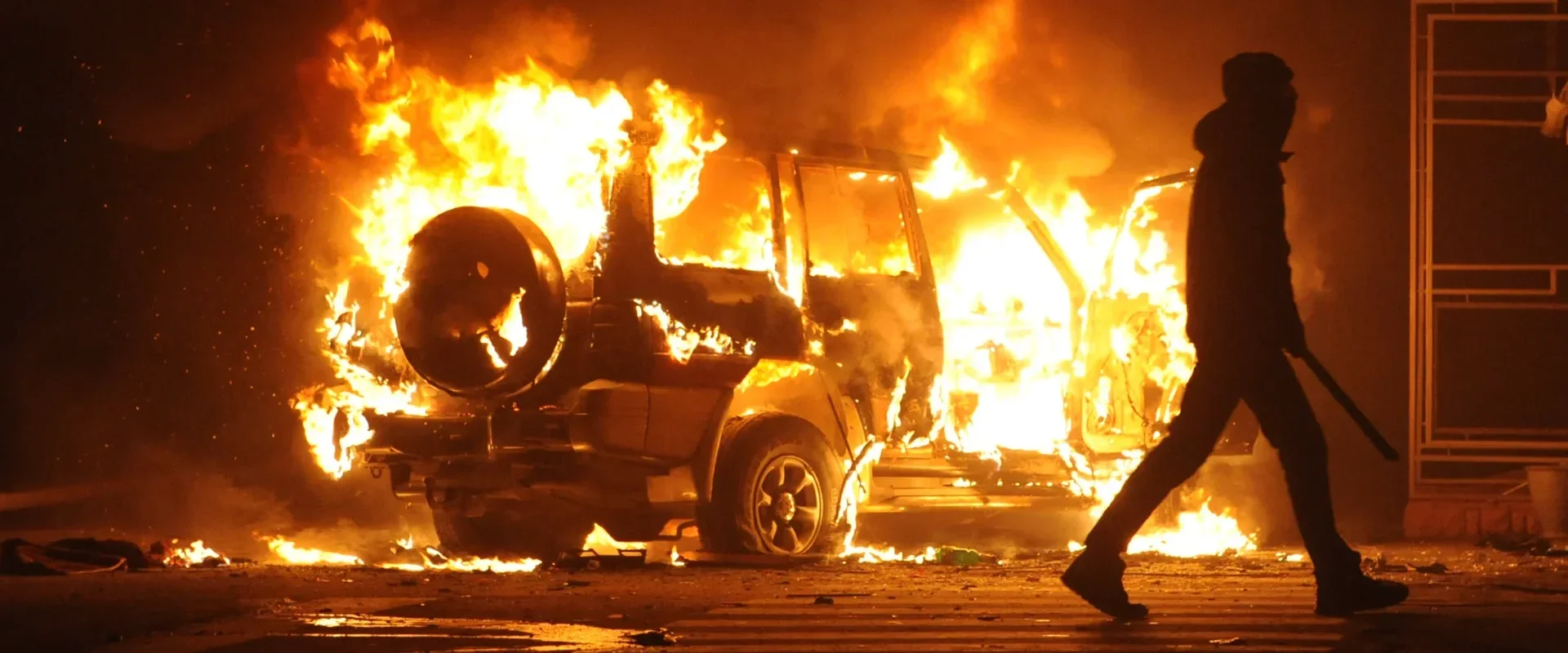
Over the past month, France has witnessed widespread protests, with thousands of people taking to the streets to demand change. What began as student demonstrations over education has developed into a much larger movement involving trade unions, workers and people struggling with the rising cost of living.
However, the demonstrations have also been overshadowed by violence, looting and damage to local business. While some protestors are fighting for better opportunities and public services, others have been left dealing with destroyed shops, disrupted communities and uncertainty about what happens next.
So, what are people actually protesting about, and why is it important to understand both sides?
1. Why Did the Protests Begin?
The current waves of protests began in September 2026, when French students raised concerns about conditions in their schools.
According to Le Monde (2026), students highlighted teacher shortages, overcrowded classroom, deteriorating buildings and the pressures associated with the French University admissions system.
However, these concerns soon became part of a much wider debate about inequality, government spending and the rising cost of living.
Research by Grasso and Giugni (2026) suggests that economic difficulties and political dissatisfaction can influence people’s willingness to participate in protests. Their research into European protest participation helps explain why frustrations over different issues can develop into broader political movements.
For many demonstrators, the issue is no longer just education. It is about whether the government is listening to ordinary people.
2. Who Is Protesting, and What Do They Want?
Although the protests are often presented as one movement, several different groups are involved.
Students and young people: Many are demanding better education funding, more teachers and improved learning environments. Their concerns also reflect anxieties about future opportunities.
Trade unions and workers: Unions, including the CGT, have joined demonstrations over public services, economic inequality and living costs.
Yellow Vest protestors: Members of the movement originally associated with fuel prices and economic hardship have returned to the streets, raising concerns about affordability and financial pressures.
Other activists and demonstrators: Some are motivated by broader dissatisfaction with President Emmanuel Macron’s government, political representation and social inequality.
These groups do not necessarily agree on every issue. However, their frustrations overlap.
Research by Saunders et al. (2012) highlights the importance of understanding different motivations within protest movements rather than assuming everyone participates for the same reason.
This matters because describing every demonstrator as either peaceful or violent overlooks the different experiences, demands and motivations behind the protests.
3. When Peaceful Protest Turns Violent
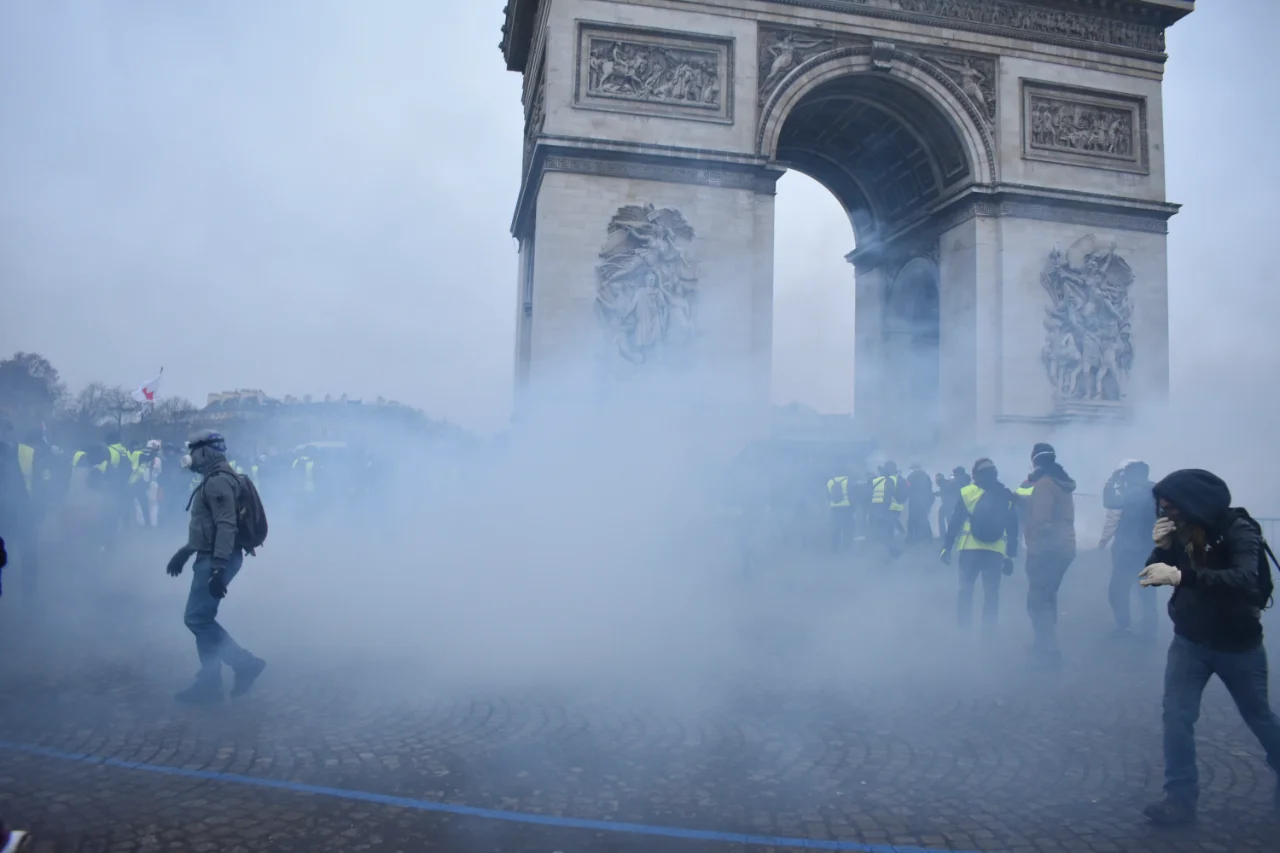
On October 17th, demonstrations across France escalated into serious unrest in several cities. Reuters (2026) reported that while hundreds of thousands participated in peaceful marches, other groups attacked public buildings, damaged police vehicles and looted shops. In Limoges, the town hall was set on fire, while businesses in cities including Paris, Lyon and Marseille suffered extensive damage.
French authorities have blamed radical groups and people involved in criminal activity for much of the violence. However, some young protestors have also criticised police tactics, including the use of tear gas.
Research by Stott et al. (2007) suggests that interactions between police and crowds can influence whether demonstrations remain peaceful or escalate into conflict. Their research highlights how policing approaches and perceptions of legitimacy can shape crowd behaviour. This does not justify violence or criminal damage. Instead, it demonstrates why understanding how protests escalate is important. The right to protest is fundamental in a democracy, but so is the right of ordinary people to feel safe in their communities.
4. The Forgotten Voices: Business Owners and Local Communities
While images of burning buildings and clashes with police dominate the headlines, the consequences for local businesses deserve equal attention. According to Le Monde (2026), shops across France have experienced looting, vandalism and temporary closures. Businesses have faced not only the cost repairing physical damage but also lost income and uncertainty about reopening. For smaller businesses, these consequences can be particularly serious.
Imagine spending years building a business, only to arrive one morning and discover smashed windows, stolen stock or extensive fire damage. Even where insurance covers some losses, owners may still face disruption, additional expenses and reduced income. Research into business resilience highlights the importance of financial resources, community support and recovery planning when businesses experience major disruption (Williams and Vorley, 2015).
Although this research is not specifically about the current French protests, it helps explain why disruption can have consequences extending beyond immediate physical damage. There is also the wider community to consider. Employees may lose working hours, residents may feel unsafe, and customers may avoid affected areas.
Supporting the right to protest should not mean ignoring the people whose livelihoods are being affected.
5. Why Are Young People So Frustrated?
For young people, the protests raise questions about their futures. Education, employment, financial independence and access to opportunities are all connected to the wider economic environment.
Research by Furlong and Cartmel (2007) explores how social and economic inequalities shape young people’s transitions into adulthood. Their work demonstrates that opportunities are not experienced equally, even when individuals are encouraged to believe that success depends entirely on personal effort.
This helps explain why concerns about education can become connected to wider frustrations about inequality. When young people feel their concerns are being overlooked, protest can become a way of demanding recognition.
However, understanding frustration is different from excusing harmful behaviour. Peaceful demonstrations can provide opportunities for young people to participate in democracy without putting other members of their communities at risk.
6. Can Protest Create Real Change?
Throughout history, protests have played an important role in challenging inequality and influencing political decisions. Research by della Porta and Diani (2006) explains how social movements develop through shared identities, collective action and political opportunities. Yet protests can also create difficult questions.
How can governments respond to public anger while maintaining safety? How can police protect communities without unnecessarily restricting peaceful demonstrations? And how can protesters ensure their demands are heard without violence overshadowing their message?
These questions have become particularly relevant in France, where restrictions on demonstrations have prompted debate about civil liberties. Reports of legal challenges to protest restrictions illustrate the ongoing tension between protecting public safety and preserving democratic freedoms.
Final Thoughts: Understanding Both Sides Matters
The protests in France are about much more than the dramatic images circulating online. Behind the demonstrations are students concerned about education, workers struggling with living costs and communities questioning whether their voices are being heard.
But there are also business owners facing financial losses, employees experiencing disruption and residents dealing with the consequences of violence. These experiences do not cancel each other out.
It is possible to support people’s right to protest while also condemning looting, destruction and violence.
For young people watching these events unfold, perhaps the most important lesson is to look beyond the headlines. Understanding a protest means listening to those demanding change, those affected by the disruption and those responsible for responding to it.
Because understanding why people are angry is important, but so is understanding who pays the price when that anger turns destructive.
References
della Porta, D. and Diani, M. (2006) Social Movements: An Introduction. 2nd edn. Oxford: Blackwell Publishing.
Furlong, A. and Cartmel, F. (2007) Young People and Social Change: New Perspectives. 2nd edn. Maidenhead: Open University Press.
Grasso, M.T. and Giugni, M. (2016) ‘Protest participation and economic crisis: The conditioning role of political opportunities’, European Journal of Political Research, 55(4), pp. 663–680.
Reicher, S., Stott, C., Drury, J., Adang, O., Cronin, P. and Livingstone, A. (2007) ‘Knowledge-based public order policing: Principles and practice’, Policing: A Journal of Policy and Practice, 1(4), pp. 403–415.
Saunders, C. et al. (2012) ‘Explaining differential protest participation: Novices, returners, repeaters, and stalwarts’, Mobilization, 17(3), pp. 263–280.
Stott, C. and Drury, J. (2017) ‘Contemporary understanding of riots: Classical crowd psychology, ideology and the social identity approach’, Public Understanding of Science, 26(1), pp. 2–14.
Williams and Vorley (2015) — full publication details require verification before use.